Keystone Academy

SS 299:2021 Updates – Fire Resistant Test Standard

In our previous Keystone Academy blog, ‘Fire resistant test standards-explained!‘. we introduced the differences among the 3 common LSZH FR test standards. In Singapore, Fire-resistant (FR) cables undergo tests given by the Singapore standard, SS 299. SS 299:2021 standards specifies the requirements of FR cables relating to characteristics required to maintain circuit integrity and the ability to reduce flame spread, emit low levels of smoke, and emit halogen-free gas during a fire. This is essential as it ensures that the power supply can be sustained so that life-saving electrical installations, such as fire alarms, smoke detectors, PA systems, and emergency lighting, can perform their functions even in the event of a fire. According to the updated Singapore FR Test standard (SS 299:2021), passing Protocols C, W, and Z is mandatory for FR cables to be fully compliant. Additionally, including other protocols, namely Protocols A, B, S, X, and Y from previous editions, is considered obsolete. This revised version was published on 23 September 2021. Fire-resistant tests: SS 299:2021 (from 23 September 2021 onwards) Fire-resistant tests: SS 299-1:1998 (before 2021) Resistant to fire alone (Category A, B, C, or S)OPTIONAL: Resistance to fire with water (Category W)This is meant to simulate fire in the presence of activated sprinkler systems. OPTIONAL: Resistance to fire with mechanical shock (Category X, Y, or Z)This is meant to simulate fire in the presence of disturbances such as falling debris. Check in with our sales team to learn more about how we can help you maintain circuit integrity while delivering energy or if you need further guidance on how the new regulation impacts your business. Contact Sales

SS 299:2021 Updates – Fire Resistant Test Standard Read More »

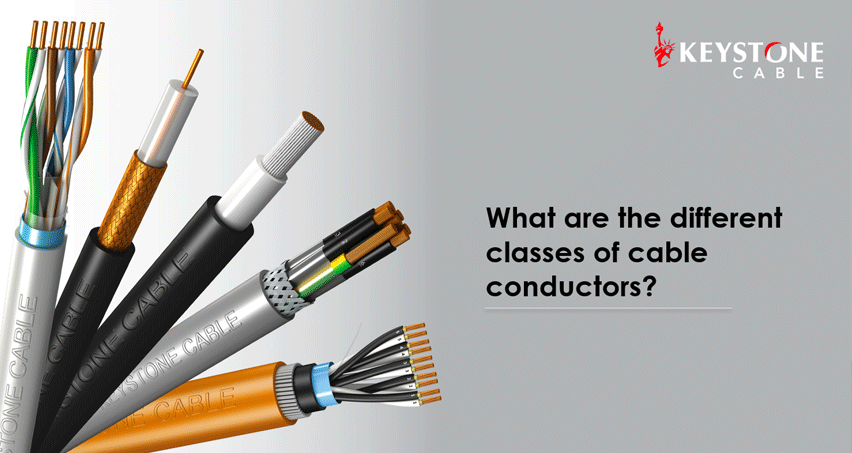
What are the different classes of cable conductors?

A cable conductor is the primary component of electrical cables. It refers to the metallic wire or wires that carry the electrical signal through the cable. Here, we examine the four different Copper (Cu) conductor categories: Class 1, Class 2, Class 5, and Class 6. Why are there different categories? The Cu conductors are grouped according to their flexibility; the higher the class, the more flexible it is. The flexibility of the Cu conductor of a cable will differ based on its unique purpose of use. The simplest conductor is a single, solid wire (Class 1). Although it offers a smaller cable in terms of diameter, the largest Cross-Sectional Area (CSA), and the purest signal, it is mechanically weak and is prone to breakage after a few cycles of bending. To improve flexibility, wires are stranded together. The more wires that are stranded together to make a given size, the more flexible the conductor will be. This implies that the higher the class, the more strands in the conductor. Furthermore, when wires are stranded together, they are much easier to bend and move during installation than a single wire with the same cross-section. Those in classes 1 and 2 are intended for use in cables for fixed installations. On the other hand, those in classes 5 and 6 are designed for use in flexible cables and cords but may also be used for fixed installations. The table below compares the different Cu conductors’ different categories. Contact us if you would like to find out more about the cable types to choose for your cabling requirement.

What are the different classes of cable conductors? Read More »

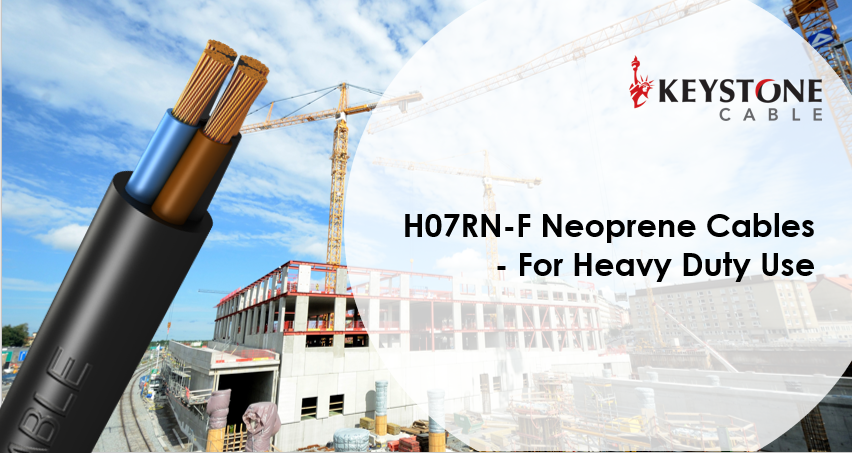
H07RN-F Neoprene Cables: For Heavy Duty Use

Power cables are ubiquitous for different industrial applications. In cases where ordinary power cables cannot operate under certain harsher conditions, H07RN-F neoprene cables become an attractive choice. What does H07RN-F mean? H – conformity to harmonized standards (set by CENELEC that standardizes electrotechnical specifications)07 – voltage rating is 450/750VR – EPR insulationN – PCP jacketF – Flexible copper conductors H07RN-F neoprene has the following properties that make it a good heavy-duty electrical cable: FlexibleIn addition to the rubber properties, which give it good flexibility, neoprene cables also use Class 5 copper conductors, which indicate finer copper strands to make up the conductor core. This prevents the cable with high flexibility properties and allows neoprene cables to be installed either as a fixed or mobile cable. Chemical ResistanceThe cables have great chemical resistance and thus can be installed under adverse conditions such as oily, acidic, and alkaline environments. Scratch ResistanceNeoprene has superior resistance to abrasions and scratches. Therefore, they are suitable and commonly used at worksites. Wide Temperature Range Compared to standard PVC insulated cables, which have a temperature rating of 5°C to 70°C, neoprene cables have a larger range of temperature rating of -25°C to 90°C; under high-temperature conditions, the neoprene cable insulation will not melt, and at low-temperature conditions, neoprene cables can still maintain its flexibility and not crack. It is thus a popular choice for use under environmental hazards, including water, sunlight, sand, and snow. Given the distinct advantages of neoprene cables, they are popular for industrial use and use in worksite equipment such as power tools, pumps and generators.  For more information on how EPR insulation may compare with other common cable materials, we have a summarized table for reference. Certified Neoprene Cables Given the heavy-duty use of such cables, selecting a brand where the neoprene cables have been certified is important. Keystone Cable’s neoprene cables are certified by VDE, a German third-party organization in standardization, testing and certifications. Our neoprene cables have been selected for use in iconic projects such as Amazon Data Centre, Singapore MRT, Jurong Port, Sengkang General Hospital, and Singapore F1. We have a strong cable specialist technical team to provide recommendations for your projects. Contact us should you require more information. Contact Sales

H07RN-F Neoprene Cables: For Heavy Duty Use Read More »

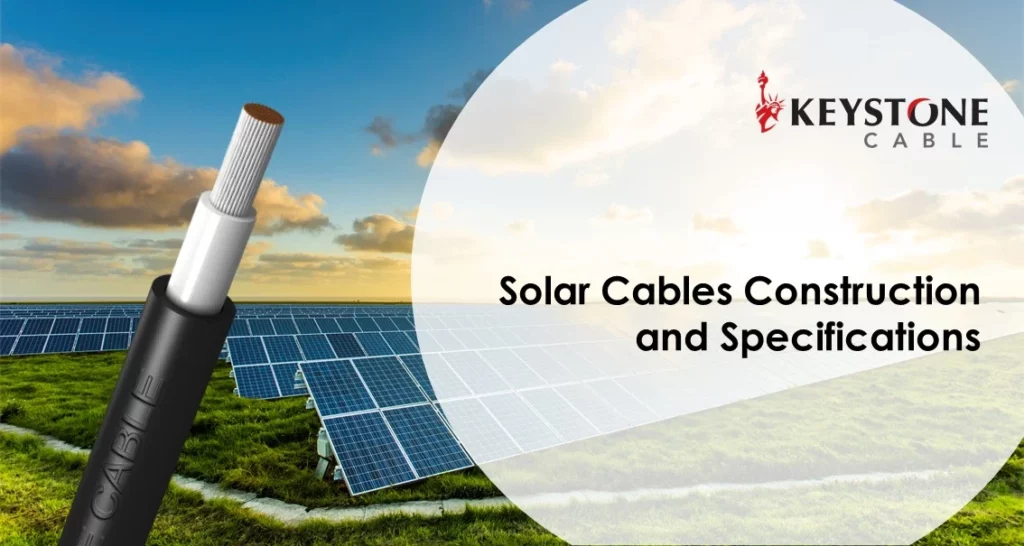
Solar Cables Construction and Specifications

In search of a clean and sustainable energy source for the future, solar remains the most promising renewable energy source for Singapore and most Southeast Asian countries. Singapore aims to harness 1.5 gigawatt-peak (GWp) of solar energy by 2025 and will accelerate the country’s goal to at least 2GWp of solar power by 2030. As a result, there is an increasing demand for Solar PV systems: solar modules, inverters, substructures, plugs, fuses, terminal boxes, and solar cables. In response to the rapidly growing demand of the solar industry, at Keystone, we play our part in contributing to renewable energy sources by providing high-quality Keystone photovoltaic cables that meet stringent requirements. A solar cable is used in photovoltaic power generation. Solar cables are designed to be UV- and weather-resistant and can be used within a wide temperature range for indoor and outdoor applications. Solar Cable Construction Keystone solar cables are double-insulated with cross-linked polyolefin (XLPO). Compared to common power cable insulations such as PVC and XLPE, XLPO has a higher nominal temperature rating of -40°C to 120°C. XLPO insulation has excellent UV resistance, flame retardancy, chemical resistance, and durability. In addition, XLPO is halogen-free, meaning it will not emit toxic gases when exposed to fire. Using poor-quality solar cables may reduce the lifespan of entire solar PV installations, whereas high-quality solar cables prevent pre-mature ageing processes when installed under appropriate guidelines. To ensure the quality of the solar cables, Keystone solar cables are manufactured in accordance with EN 50618 (H1Z2Z2-K) and certified by TÜV Rheinland. EN 50618:2014 consists of a series of stringent tests for cables used in PV systems, which include electrical properties test, constructional and dimensional test, insulation and sheathing material test, cold impact and cold bending test, ozone resistance test, weather/UV resistance test on the sheath, dynamic penetration test, damp heat test, shrinkage test, vertical flame propagation and smoke test. The entire testing process is extensive to ensure the quality and reliability of the solar cables. Keystone solar cables are reliable for the entire solar PV system lifespan as they have a service life of more than 25 years under normal use with proper installation. Here are some installation tips we have gathered to ensure a good solar cable lifespan: Avoid using installation bundles with many cables, as this could raise the ambient temperature of the cables and cause derating. Avoid having cables completely exposed to the weather and laid haphazardly or transversely. Avoid laying cables in the rain gutter. Pay attention to clamped points or cables that lean over sharp edges to prevent damage to the sheath or insulation. Do adhere to the minimum cable bending radius. For instance, please do not install the solar cables in a tight loop formation, as it would likely exceed the bending radius. As solar cables are important to the entire PV system, Keystone technical team can help provide professional guidance on choosing the most appropriate solar cables for your installation. Our solar cables have been selected for large solar farms in Singapore, Indonesia and Vietnam, such as Singapore Solar Nova HDB Rooftop solar project(25Mw), JTC Jurong Island Solar Farm in Singapore, Trung Nam Solar Power Plant(200Mw), Tra Vinh Solar Power Plant(95Mw) in Vietnam and Gangga Island Resort and Spa Solar project in Indonesia. To learn more about Keystone’s solar cables, please contact our team. Contact Sales

Solar Cables Construction and Specifications Read More »

How long do cables last?

In a nutshell, if you purchased a cable manufactured to international standards and wired indoors according to proper guidelines, your cables are generally expected to last based on a design life of at least 20-30 years. What could affect the actual cable’s lifespan? There are, however, many operational and environmental factors that would affect the actual lifespan of a cable. These include: Overload or short circuit events would cause a shortening of cable life. Whether the cable is near high heat sources (e.g. installed at a high ambient temperature that was not factored in prior or is placed next to other circuits that were not accounted for during cable sizing). Whether the cable is exposed to outdoor elements such as UV radiation or weather conditions was not a part of the original design. Or if water has reached the cable core. Or if there is an unforeseen pest attack. Presence of contaminants, oil, or acids that could degrade the sheath or insulation. If the cables are subjected to mechanical stress, such as tensile, vibration, or bending, that could occur during or post-installation. Thanks to international bodies such as IEC, BS EN, or national standards like SS (Singapore Standards), cable standards have been developed to test for performance in various cable applications. While standards do not specify the life expectancy of a manufactured cable, these standards include electrical and non-electrical tests that would allow a cable lifespan of at least 20-30 years under typical indoor use. So end users can have peace of mind about the cable’s service life when purchasing cables that come with a Certificate of Compliance to the appropriate national or international standards. To ensure optimal electrical cable lifespan, it is also important to minimize the influence of the operational and environmental factors stated above. Choosing the most suitable insulation and sheath material according to the cable application and sizing the cable correctly would be key. For more information, please reach out to our sales team.

How long do cables last? Read More »

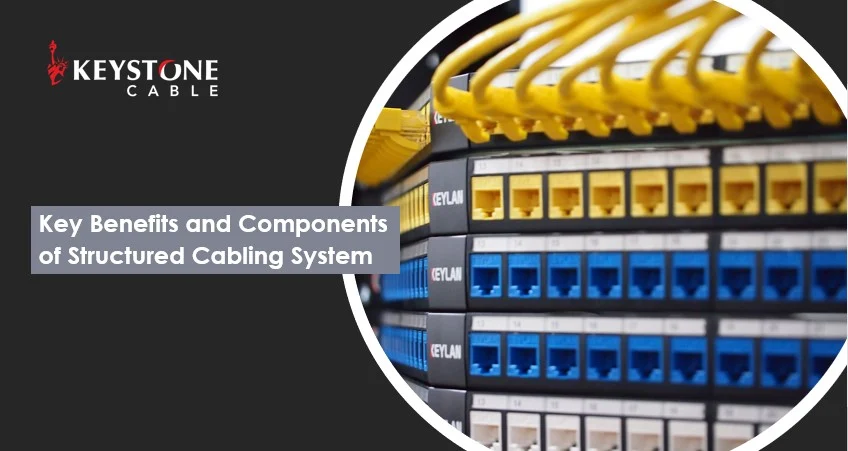
Key Benefits and Components of Structured Cabling Systems

A structured cabling system (SCS) is a set of cabling and connectivity products that integrate voice, data, and other ELV systems on the premise (e.g. safety alarms, security access, and energy systems). It is a web that connects all the devices through more minor standardized elements – providing a reliable and future-proof solution to a wide range of communication requirements. Benefits of Structured Cabling Systems One of the most significant benefits of structured cabling is that it is a future-proof, scalable system; even if the company undergoes a sudden surge of growth, a structured system can keep pace with the growing needs. Another key benefit is the high level of straightforwardness in managing the system – after the initial planning and setup – as it eliminates the complexity of having multiple wiring infrastructures. In the past, point-to-point cabling was used, which meant every piece of hardware used its cable with long runs from point to point. This often led to a mess of wiring, posing a safety hazard and a high risk of human error with multiple unorganized cabling structures. When an issue arises, the time taken to identify the root cause could be significant and cause workflow disruptions and network downtime. A structured cabling system makes the diagnosis of issues easier and simplifies the replacement of faulty components. While a structured system is a greater upfront investment than a point-to-point one, it pays for itself over time through lowered IT costs and increased employee productivity. What Is KEYLAN™ and What Are the Components? Applying the highest manufacturing standards, Keystone Cable KEYLAN™’s suite of innovative products solutions offers both copper-based cabling systems and optical fibre cabling systems. KEYLAN™ offers a range of physical infrastructure solutions and accessories, from patch cords and wall outlets to horizontal cabling and connectivity panels that interface with equipment and data centres. Our solutions are designed to withstand high-speed data traffic and ensure that even the most complex network can be connected robustly and securely. KEYLAN™ Certifications and Guarantee KEYLAN™ takes pride in ensuring our cables are tested, certified, and meet the required specifications to provide the highest quality cables that operates safely and at the peak performance. KEYLAN™’s quality consistently meets or exceeds the standards set forth by international standards, including Underwriters Laboratory (UL) and Intertek (ETL). To ensure system integrity, all KEYLAN™ solutions components are verified by ETL:ETL Verified 2-Connector Permanent Link to ISO/IEC 11801 Class EA, permanent link illustration, and part numbers. With our established project references in our LAN cables and KEYLAN™ systems since 2010 and 2014 respectively, we provide end users a peace of mind regarding the quality of the products, guaranteeing their performance, reliability, safety, and information traceability. In addition, if the entire system, including installation, is certified under KEYLAN™. the system will come with a 25-year warranty. Contact Sales

Key Benefits and Components of Structured Cabling Systems Read More »

Flame Retardant Test Standards – Explained!

In our previous Keystone Academy blog, ‘What is the Difference Between FRT and FR Cable?’, we shared that Fire Resistant (FR) cables are fire safety products which maintain circuit integrity in the presence of fire, while Flame Retardant (FRT) cables reduce the spread of fire. This is critical so that life-saving electrical installations, such as fire alarms, smoke detectors, PA systems, and emergency lighting, can perform their functions in the event of a fire. Keystone low-smoke, zero-halogen (LSZH) flame retardant (FRT) cables comply with IEC 60332, IEC 60754, and IEC 61034, which ensure that the flame retardant cables reduce flame propagation, prevent the release of toxic gases, and control smoke emission under fire conditions. This article breaks down the standard LSZH FRT test methods in more detail. Flame Propagation Tests: IEC 60332-1-2, IEC 60332-3 Flame retardant cables prevent flame propagation during a fire emergency. The cable’s protective material includes additives such as aluminium hydroxide or magnesium hydroxide. When the material comes into contact with fire, the byproduct from the endothermic reaction is gaseous water which will help envelop the flame and thereby exclude oxygen from the fire. IEC 60332-1-2 is the test for vertical flame propagation for a single insulated wire or cable. During the test, a single-core cable with a length of approx. 0.6m is mounted vertically using two clamps, and a flame is applied to the bottom end for 60 seconds (or 120 seconds if the cable’s overall diameter is >25mm). Passing Criteria: After removing the flame, the burning cable extinguishes itself, and the fire damage is at least 50mm below the upper mounting clamp. IEC 60332-3 tests vertical flame spread of vertically mounted bunched wires or cables. This test is conducted as it cannot be assumed that bunched cables will behave the same way in the fire as single cables. This is because flame propagation along a vertical bunch of cables depends on other factors, such as the volume of combustible material exposed and the geometrical configuration of the cables. Passing Criteria: After the burning ceased, the charred portion does not exceed a height of 2.5 meters. Acid Gas Emission Tests: IEC 60754 When fire comes into contact with polyvinyl chloride (PVC) or other chlorine-containing materials, hydrogen chloride gas is released. Hydrogen chloride gas forms corrosive hydrochloric acid (HCl) on contact with water found in body tissues. This irritates the eyes, mouth, throat, nose, and lungs, thus making escape more difficult. At Keystone Cable, all our fire-resistant and flame-retardant cables use Low Smoke Zero Halogen (LSZH) compounds to prevent the formation of HCl gases from burning cables. International standard IEC 60754 specifies tests for determining the degree of acidity of gases generated during the combustion of materials from electric cables by measuring the pH and conductivity. Passing Criteria: The weighted pH value is not less than 4.3 when related to 1 litre of water, and the weighted value of conductivity is not more than 10μS/mm when related to 1 litre of water. Smoke Emission Tests: IEC 61034 This test measures the smoke density of electric cables burning under defined conditions. The “3-meter cube test” measures the amount of smoke generated by cables in the event of a fire. The cables are placed in a 3m3 enclosure. A tray containing alcohol is supported above the ground surface to permit air circulation around and beneath the tray. The test pieces (cables or bundles) touched horizontally and centred above the tray. Air circulation will begin, and the alcohol (1 litre) will be ignited. A beam of light is transmitted from one window of the chamber to the opposite window. The light intensity is measured between the light source and the photocell. The test is considered done when there is no decrease in light transmittance for 5 minutes after the fire source has been extinguished or when the test duration reaches 40 minutes. Passing Criteria: The recorded light transmittance is at a minimum 60%, which means the smoke density has a maximum value of 40%. For more information, please contact our team. Contact Sales In our previous Keystone Academy blog, ‘What is the Difference Between FRT and FR Cable?’, we shared that Fire Resistant (FR) cables are fire safety products which maintain circuit integrity in the presence of fire, while Flame Retardant (FRT) cables reduce the spread of fire. This is critical so that life-saving electrical installations, such as fire alarms, smoke detectors, PA systems, and emergency lighting, can perform their functions in the event of a fire. Keystone low-smoke, zero-halogen (LSZH) flame retardant (FRT) cables comply with IEC 60332, IEC 60754, and IEC 61034, which ensure that the flame retardant cables reduce flame propagation, prevent the release of toxic gases, and control smoke emission under fire conditions. This article breaks down the standard LSZH FRT test methods in more detail.   Flame Propagation Tests: IEC60332-1-2, IEC60332-3 Flame retardant cables prevent flame propagation during a fire emergency. The cable’s protective material includes additives such as aluminium hydroxide or magnesium hydroxide. When the material comes into contact with fire, the byproduct from the endothermic reaction is gaseous water which will help envelop the flame and thereby exclude oxygen from the fire. IEC 60332-1-2 is the test for vertical flame propagation for a single insulated wire or cable. During the test, a single-core cable with a length of approx. 0.6m is mounted vertically using two clamps, and a flame is applied to the bottom end for 60 seconds (or 120 seconds if the cable’s overall diameter is >25mm). Passing Criteria: After removing the flame, the burning cable extinguishes itself, and the fire damage is at least 50mm below the upper mounting clamp. IEC 60332-3 tests vertical flame spread of vertically-mounted bunched wires or cables. This test is conducted as it cannot be assumed that bunched cables will behave the same way in the fire as single cables. This is because flame propagation along a vertical bunch of cables depends on other factors, such as the volume of combustible material exposed and the geometrical configuration of the cables. Passing Criteria: After the

Flame Retardant Test Standards – Explained! Read More »

Fire Resistant Test Standards – Explained!

In our previous Keystone Academy blog, ‘What is the Difference Between FRT and FR Cable?’, we shared that Fire Resistant (FR) cables are a fire safety product, which means they not only reduce the spread of fire but will also maintain circuit integrity in the presence of fire. This is critical so that life-saving electrical installations, such as fire alarms, smoke detectors, PA systems, and emergency lighting, can perform their functions in the event of a fire. In addition to complying with LSZH flame retardant (FRT) tests (IEC 60332, IEC 60754, and IEC 61034), LSZH FR cables are also tested to IEC 60331-21, BS 6387 or SS 299 to ensure that the fire-resistant cables maintain circuit integrity under fire conditions. In this article, we introduce the differences among the 3 common LSZH FR test standards. Resistance to Fire: SS 299 Singapore Standard SS 299 specifies tests for fire-resistant cables. This standard was updated in September 2021, and it is a modified adoption of British Standard BS 6387:2013, ‘Test method for resistance to fire of cables required to maintain circuit integrity under fire conditions’.  FR cables must pass protocols C, W, and Z test parameters to be considered fully compliant. For information on the old standard, SS 299-1:1998, refer to the blog “SS299:2021 Updates – Fire Resistant Test Standard”. Resistance to Fire: BS 6387 British Standards BS 6387 is the most commonly recognised FR cable test standard. Based on the latest standards update BS6387:2013, an FR cable is considered compliant only if it passes the BS 6387 Cat. CWZ requirement: • Resistance to fire alone, Category C (950 °C ±40 °C for 3 hours) • Resistance to fire with water, Category W (650 °C ±40 °C 15 mins flame, 15 mins water) • Resistance to fire with mechanical shock, Category Z (950 °C ±40 °C 15 mins flame, mechanical shock every 30s) Keystone Cable’s fire-resistant range complies with all of the above international standards. Contact us if you would like to find out more about the cable types to choose for your cabling requirement.

Fire Resistant Test Standards – Explained! Read More »

Electrical Wiring Colour Code in Singapore

The electrical wiring colour code is an important safety feature to allow a common language among electricians to understand what each wire is used for. If you have come across cable upgrading projects in Singapore and find a discrepancy in colours between what has been installed vs what is available in the market, this quick article is for you. Singapore’s cable colour codes for the live phase are brown, black and grey. This change took effect on 1 March 2009 when Singapore adopted the code to align with the European Committee for Electrotechnical Standardization (CENELEC), the standards organization that harmonises electrical standards in European countries. Cable Colour Code in Singapore (from 2009 onwards) Previous Cable Colour Code in Singapore (before 2009) For more information, please reach out to our sales team. Contact Sales

Electrical Wiring Colour Code in Singapore Read More »

Scroll to Top